
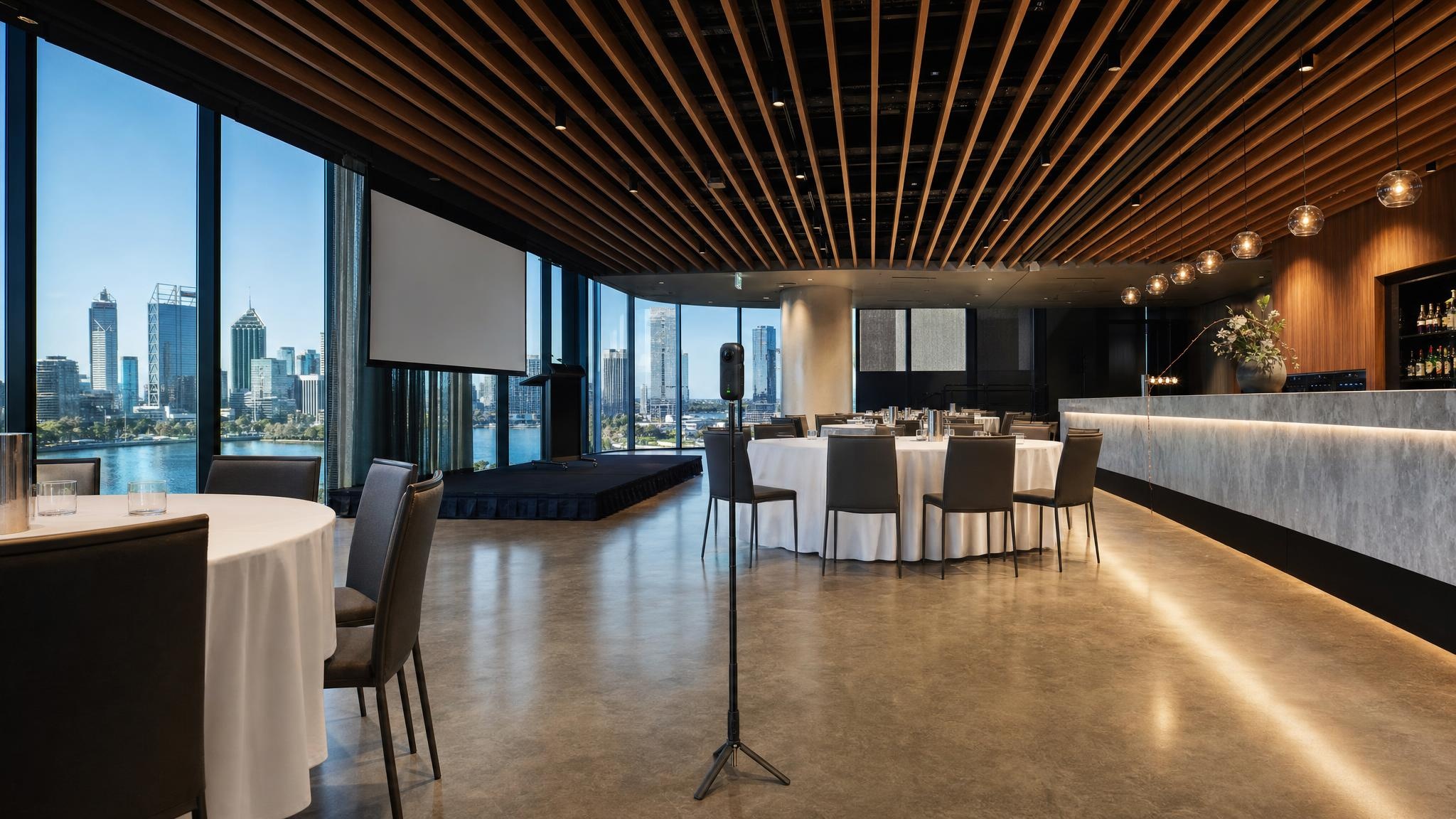
360-degree photography captures an entire spherical environment in a single shot, letting viewers look up, down and all the way around as if they were standing in the scene. The benefits come down to three things: deeper engagement, total framing flexibility, and a much faster capture on site.
It also gets written off as a gimmick, usually by people who have only ever seen it done badly. A warped horizon, a tripod sitting in the middle of the floor, seams running straight through a wall.
Done properly, it’s one of the very few content formats where the benefit shows up in your analytics rather than just in the pitch.
Engagement Benefits
1. Viewers Control the Angle
The real shift with 360-degree photography is that it turns passive browsing into active exploration. A standard photo hands someone a slice of a room that you chose for them. A 360-degree image hands over the entire scene and lets them decide where to look. That sounds like a small difference. It isn’t.
Someone dragging, zooming and exploring a space from multiple perspectives is engaged in a way a static picture can’t replicate. They aren’t being shown a place; they’re moving through it at their own pace.
That’s what makes it an immersive experience rather than a gallery, with multiple angles of the same room available on demand instead of you deciding in advance which ones mattered.
It’s also why the format builds a stronger emotional link than a flat image. Looking around a room feels closer to memory than looking at a photo of one, and it makes a digital interaction feel genuinely personal.
That’s the entire appeal of 360 and VR production as a format.
2. People Stay on the Page Much Longer
Here’s the number worth quoting: users spend up to five times longer on pages carrying 360-degree photos.
Dwell time is one of the clearest engagement signals you can send, and engagement is what feeds conversion. Interactive photos on an e-commerce page lift both, which is why interactive spins have become standard on product listings for anything complex enough to warrant a closer look.
Retailers running them see higher conversion rates than static galleries. The reason is simple: buyers can check the features that actually matter to them, instead of hoping the photographer thought to shoot that angle.
There’s a distribution benefit too. 360-degree images are easily shareable across social media platforms, which extends a single capture to a global audience without a second shoot. The same file is just as useful for creating short videos as it is for stills, so one visit can produce a month of content.
Most content formats ask you to take the value on faith. This one turns up in the analytics.
The Practical Shooting Benefits
1. Shoot First and Frame Later
Because the camera records the entire environment in one shot, you physically cannot miss the moment by pointing the wrong way. Framing stops being a live decision and becomes a post-production one.
That matters most on the jobs you only get one crack at. A concrete pour, a heavy lift, a product launch, a ribbon cutting. There’s no second take, and no operator alive is watching every corner of a site at once.
It also means far less setup. Covering a large space with a DSLR camera means multiple photos from multiple positions, then hoping you got the coverage. A 360-degree camera does it from one spot with minimal effort.
Most 360-degree cameras manage that with dual lenses and two wide-angle lenses shooting back to back while built-in software stitches the individual images into a single panoramic image.
DSLR cameras will do the same job with a wide-angle lens and a manual stitching workflow, which takes longer but holds better image quality at the end of it.
2. One File, Many Crops
A single 360 file isn’t one deliverable; it’s a source. From the same final image you can pull vertical clips for phones, wide stills for a website, and cropped still images for a report, all in different formats.
That changes the economics of a shoot. You aren’t booking separate captures for separate channels; you’re re-cutting one.
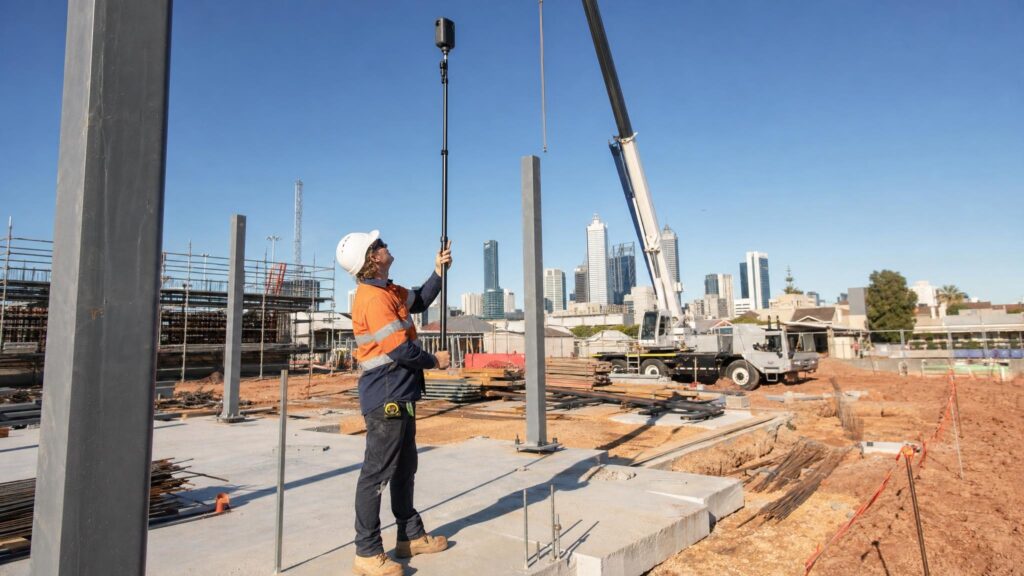
There’s a useful trick built into the format as well. Extension poles disappear at the stitch lines during editing, which gives you elevated angles from the ground without putting anything in the air.
It’s not a replacement for drone photography, and anyone who tells you that, hasn’t flown much. But for shots that sit just above head height, it’s quick, cheap and doesn’t need approval.
Where 360-Degree Photography Pays for Itself
The benefits are easy enough to list in the abstract. These are the places they show up on the invoice.
Virtual Tours for Property and Venues
Buyers and tenants walk a property after hours from home. Virtual tours qualify leads before anyone drives anywhere, which cuts the number of unqualified inspections your agents sit through.
That’s the part people underrate. The benefit isn’t only more interest; it’s less wasted time.
Spatially integrated views also foster a sense of ownership before anyone has physically visited. People start imagining their furniture in the room, which is most of the sale.
There’s a search benefit too. Embedding 360-degree photography on your site and your business profile improves local search visibility, so the asset keeps working long after the shoot wraps.
Product Photography and Fewer Returns
For online marketplaces, the pitch is simple: shoppers who can inspect an item from every angle before buying send fewer of them back.
That’s most valuable on complex products and home decor, the categories where a single hero shot leaves too much to the imagination. Spin photography handles it with motorised turntables and a few other accessories, rotating the product through a clean, controllable loop.
The payoff is measurable. 360 content establishes immediate credibility, closes the gap between browsing and handling, and lifts conversion rates on listings that were previously just a gallery of stills.
Leading brands have been doing this for years. It’s now cheap enough that they aren’t the only ones who can, which is worth knowing before you book your next round of commercial photography.
Site Records, Inspections and Progress Tracking
This is where we see the most demand, and it’s the use case that gets talked about least.
A 360 capture is a complete, accurate record of a site on a given day. Not a handful of framed shots someone chose to take, and not whatever the site supervisor remembered to photograph on their phone.
That record does two jobs. It documents progress over time, and it lets people inspect a site without standing on it.
For remote work, the second one is the whole argument. 360-degree photography bridges geographical isolation, so a head of department in Perth, an insurer in Sydney or a client overseas can walk a mining or resources site without a flight, a site induction and two days of travel.
Ready to Invest in 360 Degree Photography? Contact birds eye media Today!
360-degree photography earns its place when it’s done properly, and that’s the whole point of working with people who shoot it every week.
You get deeper engagement, longer dwell times and one capture that feeds a month of content across every channel.
Whether it’s a virtual tour, a product listing or a full site record, we’ll make sure the benefit turns up in your analytics, not just the pitch.
Get in touch with birds eye media today, and let’s plan your next shoot!